

The AIJP / Japanese Language and Culture Research Course (2-Year Program) begins at the beginner level (A1) for students who are just starting to learn Japanese. By the end of the two-year program, students aim to reach an advanced level (B2) that enables them to use Japanese effectively in real situations such as university studies or employment.
This course is designed for students who come to Japan from overseas and wish to learn the Japanese necessary for living and working in Japan. Students study Japanese comprehensively through the four language skills—speaking, listening, reading, and writing—while also learning the basics of Japanese customs and manners. The program is suitable for students from both kanji-based language backgrounds and non-kanji language backgrounds.
The course focuses on developing practical, usable Japanese, and is particularly suitable for students who:
- Those who wish to acquire the Japanese language skills needed to work in Japan, work for a Japanese company in their home country, or work for a company that does business with Japanese companies.
- Those who need Japanese language ability in order to study at a Japanese university or vocational school.
- Those who want to pass the JLPT (Japanese Language Proficiency Test).
If you require a student visa, please apply for this course.
AIJP / Japanese Language and Culture Research Course (2-Year Program) Highlights
People who wish to study Japanese have different goals and purposes. For example, some of them include the following:
- Interested in Japanese culture and society and would like to learn Japanese as well.
- Want to study Japanese thoroughly in order to use it for work, university, or vocational school.
The AIJP / Japanese Language and Culture Research Course (2-Year Program) at YAMASA is designed to meet the different learning goals of each student. The program also takes into account the diverse native languages of students from many countries, incorporating thoughtful teaching methods and extensive experience into the classes.
The main features of the program include the following:
An International Environment Where Japanese Is the Common Language
Since its establishment in 1992, YAMASA has welcomed students from approximately 100 countries. In the AIJP / Japanese Language and Culture Research Course (2-Year Program), students come from a wide range of regions including the United States, Europe, East Asia, and Southeast Asia, creating a truly multinational classroom environment.
The common language used when communicating with classmates is Japanese. Not only during class but also outside the classroom, students use Japanese while interacting with others and experiencing new cultures, which naturally helps improve their Japanese language skills.
Small Classes and Ample Instruction Time
According to the regulations of the Ministry of Education, Culture, Sports, Science and Technology (MEXT), Japanese language schools may have up to 20 students per class. At YAMASA, however, classes are typically kept to an average of fewer than 15 students. Smaller class sizes provide students with many opportunities to speak and actively participate.
MEXT regulations also require 45 minutes per class period and at least 760 class periods per year, which equals more than 570 hours of instruction annually. In the AIJP / Japanese Language and Culture Research Course (2-Year Program), each class period is 50 minutes, with 828 class periods per year, resulting in approximately 690 hours of instruction annually—about 1.2 times the required amount.
This extended study time allows students to develop practical, usable Japanese skills.
Goals of Learning Japanese
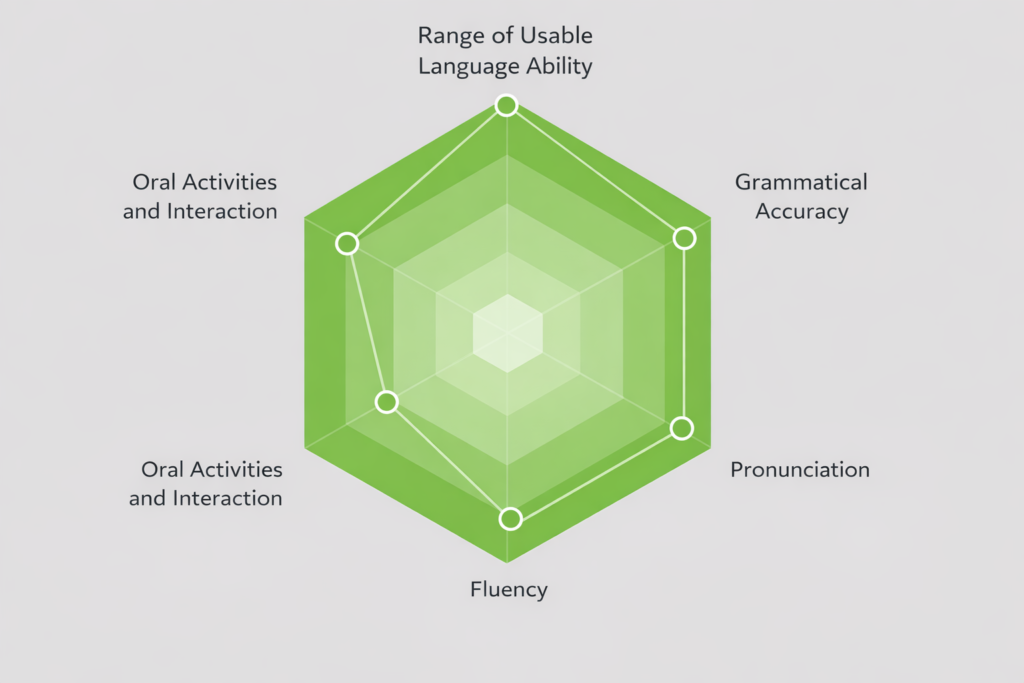
Is the goal of learning Japanese to be able to use it at a university or vocational school, or to use it in the workplace? At YAMASA, we have introduced an evaluation system developed in cooperation with local companies, based on the CEFR and the Japanese Language Education Reference Framework.
Based on the results of this evaluation, we provide classes and guidance designed to help students develop practical, usable Japanese skills.
We strive to provide lessons that match each student’s individual learning style and learning goals.
According to psychologist Gardner, known for the theory of multiple intelligences, and education theorist Fleming, who proposed the VARK (Visual, Aural, Read/Write, Kinesthetic) model, people use a variety of perceptual approaches when acquiring knowledge. This idea is also highly valued at YAMASA.
At YAMASA, we provide a variety of learning styles, including not only textbooks but also audio materials, video, hands-on experiences, and online learning. In addition, the curriculum includes a range of elective classes so that each student can further deepen the areas they most want to study according to their individual learning goals.
Improve Your Japanese by Using It in Practice
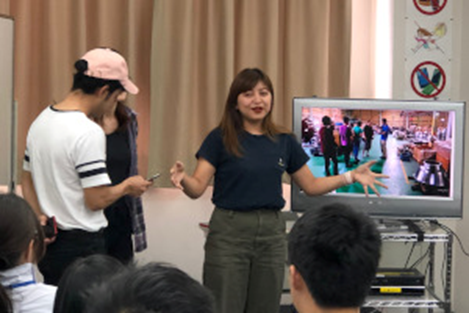
In addition to offering diverse learning styles, YAMASA also provides opportunities for students to use Japanese in real-life situations. With the cooperation of the Hattori Group, which supports the institute, students can experience conversations with Japanese people in various workplaces. Students also go out into the local community around the school to conduct interview activities with local residents using the Japanese they have learned.
Experiencing real, living Japanese not only helps students gain confidence in using the language, but also motivates them to continue improving their Japanese skills.
Online Learning System
At YAMASA, we have also introduced our own online Japanese learning systems, such as the “Online Kanji Dictionary.” By visiting this system, you will see that it offers innovative learning materials that are closely connected with classroom lessons. By accessing this learning system from your PC or tablet at home, you can further expand your knowledge of Japanese.
Deepen Your Understanding of Japan through Cultural Experiences and Short Trips
Participants in the AIJP course can join optional Japanese cultural experience classes and weekend excursions organized by YAMASA (additional fees apply). The Japanese language is closely connected with Japan’s climate, history, and traditional culture. Experiencing and learning about these aspects is important for gaining a deeper understanding of both Japan and the Japanese language.
Okazaki City, where YAMASA is located, is a city rich in history and culture. In addition, famous destinations such as Kyoto, Ise, and Takayama—known for their unique traditions and cultural heritage – are close enough for day trips. While studying Japanese, we encourage you to take the opportunity to experience many different aspects of Japan.
Goals and Objectives of the Japanese Language Program
Program Purpose
The Japanese Language and Culture Research Course (2-Year Program) aims to help international students develop the ability to accomplish their goals by respecting different cultures and gaining a deeper understanding of the Japanese language and Japanese culture.
Program Goals
Through two years of study, students aim to reach Japanese language proficiency at the B2 level. This includes the following abilities:
- To understand the main ideas of complex texts on both concrete and abstract topics related to Japanese society and culture, and to recognize the issues discussed.
- To logically explain one’s own opinions in order to address these issues, clearly present key points while respecting different cultures, and engage in persuasive and effective communication.
Levels and Study Duration
| Course | Class | Period | Level(JLPT) | ||||
| AIJP / Japanese Language and Culture Course (2-Year Program) | Beginner 1(A2.1) | 3 months | N5 | N4 | |||
| Beginner 2(A2.2) | 3 months | ||||||
| Intermediate 1(B1.1) | 3 months | N3 | |||||
| Intermediate 2(B1.2) | 3 months | N2 | |||||
| Upper-Intermediate 1(B2.1) | 6 months | ||||||
| Upper-Intermediate 2(B2.2) | 6 months | N1 | |||||
※The Japanese Language and Culture Course (2-Year Program) begins with the Beginner 1 (A2.1) class at the time of enrollment.
Courses and Content of the Japanese Language Program
| Subject | Content |
| Kanji | Study the origins of kanji, the meanings and sounds of their components, and the reading and writing of vocabulary and sentences using kanji. Practice is tailored to each student’s goals and progress. (This subject is taught up to the A2.2 level; from B1.1 onward, it is conducted as self-study.) |
| Vocabulary | Learn and use vocabulary needed for personal topics, everyday situations, and social topics in practical communication. |
| Grammar | Learn and use the grammar necessary to construct simple and complex sentences about personal topics, situations, and social topics, and to express nuances effectively. |
| Reading | Read texts about personal topics, everyday situations, and events occurring in Japanese society. Students confirm their understanding in pairs and summarize the content. |
| Listening | Listen to conversations, news reports, and discussions about personal topics, everyday situations, and events occurring in Japanese society. Students reproduce what they have understood in pairs. Even if unfamiliar words appear in the conversation, they learn to infer their meaning from the surrounding context. |
| Speaking (Interaction) | Practice interaction on personal topics, everyday situations, and social issues, while learning the strategies and sociolinguistic skills needed for effective communication. Through practice, students develop the ability to move from situations where communication is difficult or unclear to ones where they can communicate successfully and be understood. |
| Writing | Write about events and personal opinions related to personal topics, everyday situations, and social issues. Students organize their ideas using tools such as mind maps and matrices. |
| Speaking (Presentation) | Give a monologue about events and personal opinions related to personal topics, everyday situations, and social issues. Students also check whether what the speaker intends to convey matches what the listener has understood. |
| Integrated Skills | Give presentations on social topics of personal interest or events actually occurring in Japanese society, followed by a question-and-answer session. (Conducted from the B1.1 level onward.) |
Independent Learning Support | After the start of the semester, students set their self-study goals for the term and create a “Goal Sheet.” Based on this, they develop a study plan. At the end of the semester, they review whether their goals have been achieved and analyze the results. |
Course Fees for the AIJP / Japanese Language and Culture Course (2-Year Program)
| Course Name | Admission Fee | Tuition Fee | Facilities Fee | Textbook Fee (*) | Total Fee |
| Japanese Language and Culture Research Course (2-Year Program) | ¥85,000 | ¥1,672,320 | ¥35,200 | ¥70,400 | ¥1,862,920 |
(*)The materials fee is subject to tax and the amount shown includes consumption tax.
- For applicants requiring a student visa, the application screening fee is JPY 33,000. For applicants with other types of visas, the application screening fee is JPY 16,500.
- In the case of re-enrollment, the admission fee is waived (the admission fee is JPY 85,000 as part of the initial costs).
- Tuition fees can be paid in installments of six months.
- If the tuition for one year or more is paid in a lump sum, a 10% discount will be applied.
Application Period and Tuition Payment Period
| Enrollment Period | Application Submission Period | Tuition Payment Period |
|---|---|---|
| April | From August of the previous year to September 15 | Within two weeks after the COE is issued (February) |
| July | From December of the previous year to January 15 | Within two weeks after the COE is issued (May) |
| October | From February to March 15 | Within two weeks after the COE is issued (August) |
| January | From June of the previous year to July 15 | Within two weeks after the COE is issued (November of the previous year) |
*For the actual application period, please refer to the Information Disclosure page.
*Applicants who wish to enroll with a student visa must prepare their application documents in accordance with the schedule above.
Class Hours
| Class Days | Monday to Friday |
| Total Classes per Semester | The total number of classes in one semester (three months) is 207 class periods. |
| Daily Class Schedule | Classes start at 9:00 and end at 13:30. The lunch break is 50 minutes. |
| Lesson Length | 50 minutes |
Each class is 50 minutes long, and there is a 10-minute break between classes.
| 時間目 | Monday | Tuesday | Wednesday | Thursday | Friday | |
|---|---|---|---|---|---|---|
| 1 | 9:00 – 9:50 | Class Lessons | ||||
| 2 | 10:00 – 10:50 | |||||
| 3 | 11:00 – 11:50 | |||||
| 11:50 – 12:40 | Lunch Break | |||||
| 4 | 12:40 – 13:30 | Classroom Lessons | ||||
During the first to fourth periods, students study the four language skills in order to effectively improve their Japanese. The four skills are reading, writing, speaking, and listening. In class, students develop these four abilities through repeated practice and active participation.