

Overview
Have you already thought about where you will stay in Japan? Your accommodation can have a significant impact on the success of your Japanese studies. Some international students in Japan live in unsatisfactory housing and must spend long periods commuting by crowded trains, subways, or buses because they cannot afford higher rent. If your accommodation is inconvenient, requires long commuting times, or involves complicated contracts, it may be difficult to live comfortably and economically, which can make studying Japanese more challenging.
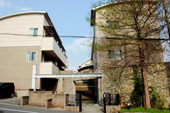
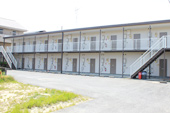
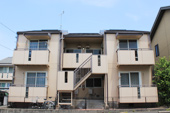
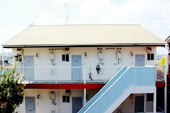
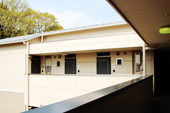
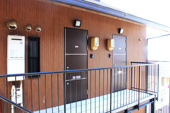
YAMASA has many student dormitories, all carefully managed by full-time dormitory staff. Students can also choose their preferred room. For details about the facilities, floor plans, maps, and photos of each dormitory, please click the links on the left side of the page.
Dormitory Facilities
Map
Accommodation in Japan
If accommodation is expensive, poorly equipped, or requires a long commute, it can become a burden for students. To concentrate on studying, it is important to have comfortable and satisfactory housing. In large cities such as Tokyo, commuting times of 45 to 90 minutes are common. However, for students, long commutes are neither practical nor desirable.
For international students, it can be difficult to find a suitable room. Most real estate agencies in Japan require a Japanese guarantor. Many schools in Japan, including universities, do not provide sufficient dormitories for international students and instead leave the arrangement of accommodation to individuals through real estate agencies.
Rent is also an important factor. Most real estate agencies require initial fees known as “shikikin” (deposit) and “reikin” (key money), which together can amount to three to six months’ rent and are often not refunded after moving out. For example, if a student plans to study in Japan for six months, they may end up paying the equivalent of more than nine months’ rent. Because of rental contracts and non-refundable deposits, moving to another place can be difficult and expensive.
According to the Japan Student Services Organization (JASSO), international students in cities such as Tokyo and Osaka spend between JPY 123,500 and JPY 168,800 per year on commuting to school.
YAMASA Dormitories
In contrast, YAMASA offers dormitories operated by the school within walking distance of the campus. The dormitories are managed by the school office, so students can consult with staff whenever necessary. The rooms are fully furnished and equipped with appliances, and options include studio apartments, 2DK and 3DK apartments, as well as a student village with 50 rooms.
YAMASA’s dormitories are located in quiet and safe residential neighborhoods, with shops and restaurants nearby. The rooms are about twice as large as comparable rooms in cities such as Tokyo or Osaka. Students also do not need to spend money on transportation to attend classes.